As the mobility industry enters 2026, it is facing less of a technological revolution and more of a pragmatic reality check. OEMs and technology providers must navigate a complex mix of architectural, technological, and regulatory challenges shaping today’s mobility trends. Years of ambitious roadmaps, electrification promises, and software-defined vehicle narratives have created expectations that now collide with economic constraints, safety considerations, and increasingly complex supply chains.
After a promising phase of experimentation, conceptual debates, and fragmented innovation, the mobility industry is shifting from defining the future to executing it at scale. Software-defined mobility, AI-driven development, and cross-industry partnerships are reshaping how OEMs, technology providers, and ecosystem players operate.
Intellias experts share their perspective on what truly matters in 2026, separating hype from reality and outlining what companies must focus on now to remain competitive, defining the next generation of future mobility trends.
Mobility moves from bright vision to strategic execution
The most significant shift in 2026 is not a single breakthrough technology or industry mobility trend, but a change in mindset. After years of defining SDV concepts, AI frameworks, and development methodologies, the industry is moving toward practical execution in real production environments.
Throughout 2025, OEMs actively experimented with new architectures, partnerships, and AI initiatives. The result, however, was often fragmented: competing standards, inconsistent terminology, and parallel architectural approaches across the ecosystem.
In 2026, we expect real clarity in SDV definitions as the industry is shifting into a phase where value must be proven, not theorized. From OEMs to suppliers and partners, everyone will be pushed to show tangible outcomes: shorter development cycles, scalable SDV deployments, and AI-driven workflows integrated into daily engineering. The message is simple: execution must prevail over experimentation.
SDV development: From fragmented architectures to scalable platforms
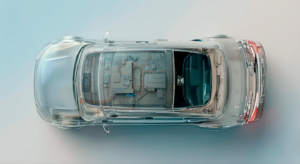
The transition toward Software-Defined Vehicles begins with a fundamental transformation of vehicle electronics architecture. The industry is steadily moving away from fragmented, domain-based systems toward centralized compute and high-performance computing (HPC) platforms. While this consolidation simplifies the hardware landscape, it simultaneously introduces far greater software complexity, placing significant pressure on development processes, system integration, and architectural design.
This shift also exposes a wide gap between traditional OEMs and newer “greenfield” players. Established manufacturers must reshape legacy systems that slow the adoption of modern software strategies. New entrants, by contrast, start with clean architectures and software-centric development models, enabling faster iteration and often greater platform scalability.
To keep pace with the shift toward software-defined vehicles, OEMs must adopt the key enablers of scalable SDV development. This means moving to unified EE architectures that replace fragmented domains, strictly decoupling hardware and software layers, adopting standardized APIs, and stronger open-source collaboration. Continuous development must extend well beyond SOP, which should be seen not as a final milestone but as the starting point of ongoing software evolution. Without these foundations, automakers risk building systems that remain difficult to scale, maintain, and evolve over time.
EVs in 2026: The goal is market saturation rather breakthroughs
A record 437,487 electric vehicles (EVs) were sold in the third quarter of 2025, with EV share reaching 10.5% of the total market. With government-supported EV sales incentives set to expire at the end of September, many buyers rushed to finalize purchases, pushing total volumes nearly 30% higher year over year.
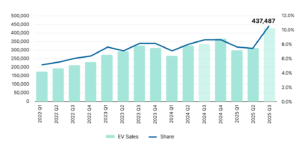
Yet despite the strong growth momentum of the past decade, EV adoption in many regions is beginning to plateau. Electric vehicles have proven to be an excellent solution for urban mobility, but they are still far from becoming a universal replacement for traditional powertrains. This development highlights an important shift in electric mobility trends.
Consumer hesitation remains one of the key barriers. Even if drivers only occasionally leave the city, concerns about charging availability and driving range continue to influence purchasing decisions. As a result, several eMobility trends are emerging as the industry searches for more flexible solutions:
- Continued development of internal combustion engine (ICE) lineups
- Extended Range Electric Vehicles (EREVs) — EVs equipped with small onboard generators that recharge the battery without mechanically driving the wheels
- Future EREV concepts using hydrogen-powered generators
What consumers increasingly demand are affordable compact electric vehicles in the €15,000–€20,000 range. The current generation of high-end EVs often priced between €50,000 and €80,000 no longer aligns with economic realities for many buyers. Expanding EV adoption will depend less on technological breakthroughs and more on delivering practical, accessible vehicles for an average consumer.
AI expands its role in the vehicle lifecycle
One of the most visible mobility technology trends heading into 2026 is the rapid expansion of Artificial Intelligence (AI) across the entire software and product development lifecycle (SDLC). AI is increasingly being applied to requirements analysis, coding, testing, and validation, accelerating engineering workflows and improving development efficiency. This shift began gaining momentum in 2025 and continues to evolve through new industry initiatives, including collaborations such as the COVESA Generative AI Working Group.
AI is now integrated across multiple stages of vehicle development and operation, including:
- Software development, testing, validation, and simulation
- In-vehicle experiences, particularly conversational and voice-driven interfaces
- Autonomous and assisted driving capabilities
- Backend engineering processes, including requirement analysis and quality management
The industry has even begun adopting the term “AI-defined vehicle,” reflecting the expanding role of artificial intelligence across vehicle platforms. Yet the core objective remains unchanged: AI must ultimately deliver tangible value to drivers and vehicle users, not just hype around.
The most successful companies in the market such as Tesla and rapidly advancing Chinese OEMs stand out because they apply AI pragmatically, focusing on improvements that directly enhance everyday driving experiences rather than treating AI as a trend.
AI has quickly become one of the most talked-about topics in automotive, yet its real capabilities in production vehicles remain far more limited than the hype suggests. Most current deployments still revolve around productivity tools rather than automotive-grade features. At the same time, the industry is moving toward Physical AI – systems that connect digital intelligence with real-world vehicle behavior through sensors and actuators – but scaling these capabilities remains highly complex. The key question now is how much AI computing power vehicles truly need and how to operate it sustainably at scale.
AI tooling empowering software development, validation, and quality assurance
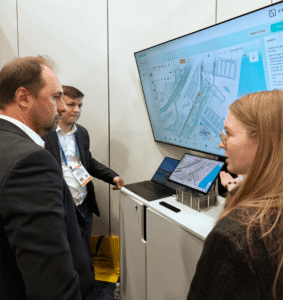
AI is transforming how automotive software is developed and validated. A recent showcase presented at CES 2026 illustrates this shift through an AI-powered visual testing approach for in-vehicle infotainment (IVI) systems, developed as part of ZEEKR’s software quality strategy with engineering support from Intellias.
The solution combines vision-language models (VLMs) and computer vision to automate end-to-end HMI testing. Test cases are generated directly from written requirements and UX design guidelines, and the system executes automated checks across navigation, comfort features, media, and connectivity. Instead of relying on manually scripted test cases, the system interprets IVI screens similarly to a human reviewer, detecting layout and content issues, validating user flows, and monitoring performance in real time.
This approach significantly expands the scope of quality assurance. AI-driven visual testing can run thousands of regression scenarios continuously, enabling broader test coverage than traditional manual testing processes and delivering measurable benefits for automotive software development.
What AI solutions will become standard in 2026, and which approaches are outgrowing the hype?
Despite the visible progress, some areas of automotive development remain significantly harder to automate. Embedded software development with its tight hardware constraints, low-level programming requirements, and safety-critical validation processes remains one of the most challenging domains for AI adoption. While AI-assisted tools are already being piloted, fully automated embedded development workflows remain unlikely in the near term.
Technology and customer behavior matter, but the real bottleneck in 2026 is budget. AI costs are skyrocketing: compute-heavy cloud workloads make even small startups struggle with expenses for training, hosting, and inference. For AI to scale sustainably, the industry needs more efficient energy use, optimized infrastructure, and entirely new economics.
At the same time, new deployments may emerge as AI tools evolve. One of the most forward-looking predictions is the growing role of voice-based interaction. Younger generations increasingly prefer speaking over typing, and rapid advances in voice technologies, such as those developed by companies like SoundHound AI and Cerence AI, are opening the door to new possibilities. Voice may soon become a practical input method not only for user interfaces, but also for engineering workflows, enabling voice-assisted programming and agent-driven development environments.
Voice could emerge as a powerful interface not only for in-vehicle experiences but also for software development. As AI-driven, agent-based workflows advance, interacting with systems through speech may reshape how engineers design, build, and manage software.
Data monetization: Untapped opportunity for OEM
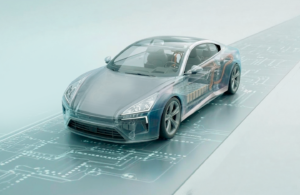
Many OEMs sit on vast pools of vehicle and infrastructure data without fully recognizing its potential value. Connected vehicles continuously generate information about driving behavior, traffic patterns, vehicle health, and infrastructure conditions, yet much of this data remains underutilized. Unlocking this data is becoming a critical driver of smart mobility trends, enabling new services, predictive maintenance capabilities, and location-aware digital experiences.
Even relatively small fleets can generate meaningful insights. For example, around 2,000 vehicles operating in a city such as Vienna can already provide road congestion data detailed enough to support commercial traffic intelligence services. Similarly, data collected from fleet operators, ride-hailing platforms, and logistics companies can unlock a wide range of monetization opportunities through adjacent digital services.
High-value use cases for mobility data include:
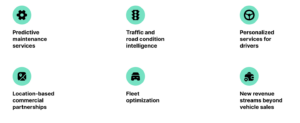
Practical implementations are already emerging. In some cities, for example, service stations use operational patterns derived from mobility data to offer fast maintenance services to taxis while they wait in queue, turning idle time into an operational advantage.
The industry continues searching for sustainable monetization models. Despite years of experimentation, no universal data monetization strategy has yet proven consistently successful across the automotive market. Some approaches have clearly failed, most notably subscription fees for basic vehicle features, such as seat heating, which many consumers rejected outright.
More promising opportunities are emerging in areas such as:
- Autonomous driving datasets, including mapping and algorithm training
- Highly personalized infotainment and digital experiences
- Context-aware services tailored to driving routines and driver preferences
- Seamless integration between smartphones and in-vehicle systems
Conversational AI may further expand the value of vehicle data. By capturing real-time user intent through natural interaction, AI systems allow OEMs to understand what drivers need at the exact moment.
Real-time driver feedback: AI and data monetization SDV use case
One practical example of how OEMs can unlock value from vehicle data and AI comes from the ZEEKR navigation project, which demonstrates how real-time driver interaction can generate actionable product insights.
Instead of relying on traditional feedback channels such as surveys, analytics, or delayed app reviews, drivers can instantly report suggestions or issues directly from the vehicle through a single button press and a voice command. This input is automatically transmitted to backend engineering systems such as Jira, allowing development teams to capture real-world user signals at the moment they occur.
The project titled “Breaking Through with Customer-Led Navigation Intelligence” combines ZEEKR’s customer-centric approach, Intellias AI-powered feedback platform, and Mapbox advanced mapping and location technology. The resulting navigation solution delivers a clean user interface, compliance with European mapping standards, region-specific Points of Interest, and integrated charging infrastructure across Europe. The project was nominated in the Navigation and Mapping category at AutoTech Breakthrough Awards 2025 for its dynamic feedback architecture driven by real user input.
The navigation application enables ZEEKR drivers across Europe to submit voice and screen feedback directly through the in-vehicle interface. This feedback is captured and processed through a secure cloud-based platform developed by Intellias and built on the Mapbox Navigation SDK, which supports real-time updates, traffic-aware routing, 3D lane guidance, and seamless integration of user-generated insights.
What Companies must do now to be competitive in 2026
In an era flooded with AI-driven shortcuts, sustainable innovation still depends on deep, hands-on understanding of technology. Mobility trends will evolve and tools will change, but engineering fundamentals remain the backbone of reliable mobility systems.
To stay competitive, organizations must:

AI can significantly augment productivity, but it cannot replace the deep technical understanding required to design and operate complex systems reliably in real-world environments.
Partnerships: The critical engine of mobility transformation
It’s time to admit: No single company can deliver software-defined mobility alone. SDV platforms, AI-enabled services, and connected vehicle ecosystems require capabilities that span automotive engineering, cloud infrastructure, mapping technologies, cybersecurity, and data analytics. As a result, strategic partnerships are becoming essential for scaling innovation and implementing automotive mobility trends in reality.
Regional partnership models reflect different industry dynamics.
- Europe is seeing a strong rise in public–private collaboration, alongside growing momentum around open-source ecosystems such as Eclipse SDV and other EU-backed federated initiatives.
- China continues to demonstrate extremely fast execution cycles, supported by close government–industry alignment and rapidly improving product quality.
- The United States presents a more diversified landscape, where private innovation hubs and technology companies frequently drive experimentation and platform development.
Despite these regional differences, the core industry trend is clear: collaboration across ecosystems is becoming a prerequisite for delivering modern mobility platforms.
If there is one defining success factor for 2026, it is speed. Traditional automotive cycles of 2–2.5 years are no longer viable. New players now deliver first versions in just five months and iterate multiple times before traditional OEMs release their initial build. This gap in execution creates a growing divide in market competitiveness. To keep up, efficiency must improve across decision making, engineering, validation, supply chains, and partner ecosystems. In the end, the fastest companies will win, not the biggest or the oldest.
Why OEMs can’t scale without strong software partners
Even the most ambitious OEMs attempting to build large internal software organizations cannot realistically cover the entire scope of software-defined vehicle development. The scale and complexity of modern automotive software require a broader ecosystem mindset.
This shift makes software-born companies and IT engineering partners increasingly important in the mobility ecosystem. Their expertise can accelerate platform development, strengthen security, and introduce development practices proven in adjacent technology sectors.
The mobility industry in 2026 isn’t driven solely by groundbreaking tech. Its progress depends on pragmatic adoption over hype, cost-efficient and realistic product strategies, safety-focused implementation, operational discipline, and smarter use of data and partnerships. The challenges are significant, but so are the opportunities – success will favor those who act with agility, resilience, and a clear understanding of what truly creates value today.
Conclusion: The SDV future requires ecosystem
The transition to software-defined vehicles and AI-driven mobility is reshaping nearly every dimension of automotive development from vehicle architectures and cloud strategies to monetization models and cybersecurity practices. These developments define the future of mobility trends, where scalable software platforms and ecosystem collaboration become the foundation of competitiveness. Companies that succeed in this new environment will be those willing to embrace standardization, open collaboration, intelligent use of AI, and deep partnerships across the mobility ecosystem.
The year 2026 marks a pivotal moment in conquering global mobility trends. The industry now has a clearer understanding of the challenges, the underlying technologies are maturing, and early adopters are demonstrating what is possible. The coming years will determine which OEMs can transform SDV ambitions into scalable, secure, and truly user-centric products.
In this context of mobility trends 2026, strong partnerships are becoming essential for navigating the complexity and pace of modern mobility development. Leading global mobility players are already turning to partners such as Intellias to accelerate time to market through rapid AI-enabled engineering, faster validation and verification processes, and advanced navigation and digital cockpit solutions delivered in months rather than years. Combined with scalable engineering capacity, this collaborative approach enables OEMs to respond more quickly to evolving market expectations and maintain competitiveness in an industry where execution speed is becoming the ultimate differentiator.
Authors

Oleksandr Odukha, SVP Delivery, Head of Mobility at Intellias

Adam Konopa, Technology Director, Mobility at Intellias