Our services
Our medical device software engineering teams deliver software for hospital systems, remote patient monitoring platforms, wearables, and other medical applications.
We create custom medical device software in compliance with the latest regulations to enable real-time monitoring and management of medical device software solutions, collect and analyze health data, and allow for integration with other peripheral smart devices within healthcare systems.

Embedded software enables medical devices to operate accurately and securely. We develop software for Class II and Class III medical devices, including wearable and implanted devices:
- Class II devices – medium-risk medical devices, such as CT scanners, wearable glucose monitors, blood pressure monitors and wearable ECG sensors
- Class III devices – high-risk medical devices, such as implantable nerve stimulators, cardiac ablation systems and neuromodulation therapy

Our medical device software solutions assist medical professionals in carrying out critical tasks such as making diagnoses, planning treatment, viewing and recognizing images, and monitoring health conditions. SaMD solutions are not considered hardware medical devices.
Devices that can run SaMD solutions include:
- Smartphones and tablets
- PCs and laptops
- Smartwatches and wearable fitness trackers
- Smart TVs
Our capabilities

Medical device app development integrated with software for medical devices enables real-time monitoring, data analysis and individualized therapy modifications. Users can easily access vital signs, medication schedules and treatment progress, as well as communicate with practitioners in real time.

Cloud-based platforms enable integration of large amounts of data from disparate sources so that medical practitioners can get meaningful insights into patients’ health. Such platforms can also detect device issues quickly and enable remote configuration when necessary.

Predictive analytics with data from connected devices allows for identification of patient trends and forecasting of illnesses with exceptional precision. Such analysis can recognize early-stage risks, allowing for prompt interventions to improve patient outcomes.

Integrating complex medical equipment and devices with IoT technology enables real-time monitoring of both device location and sanitation status. Additionally, the ability to perform remote maintenance allows technical teams to identify issues, perform upgrades, and carry out repairs from anywhere with greater efficiency.

Integrating medical equipment software with remote patient monitoring systems enhances clinical decision-making with data-driven insights while enabling patients to easily access user-friendly interfaces and data visualizations.
Who we serve:

Laboratories

Blood banks

Medical device manufacturers

Hospitals
Pharmaceutical companies

Research centers
What we help you achieve

Accuracy and precision
Our software helps improve the accuracy of medical devices by processing large amounts of data quickly and with high precision, reducing human error.

Remote monitoring
and telemedicine
Medical device software enables remote monitoring of patients via connected medical devices. This allows healthcare professionals to track patient data from a distance, reducing the need for frequent hospital visits while still providing timely interventions when necessary.

Regulatory compliance
Medical device software ensures that devices adhere to rigorous industry standards and regulatory requirements (such as FDA and CE marking requirements). Software features can include compliance with medical standards, documentation, and audit trails, which streamline the approval and monitoring process.

Patient safety and
risk management
Medical device software helps mitigate risks associated with medical devices by incorporating safety features such as alerts, automated diagnostics and fail-safe mechanisms.

Cost reduction
Medical device software helps reduce healthcare costs by improving the efficiency of devices and enabling remote care. Software-driven solutions can optimize resource allocation, reduce the need for hospital readmissions and support the efficient use of equipment and personnel.

Usability
Medical device software is designed to provide intuitive, easy-to-use interfaces for both healthcare professionals and patients that ensure quick adoption and correct use, which is critical in high-pressure medical environments.
Your questions answered
Medical device software is regulated by health authorities such as the FDA in the US, the EMA in Europe, and other national regulatory bodies. These agencies ensure that software complies with stringent standards for safety, effectiveness and security.
Our developers follow rigorous testing and software documentation procedures, including validation and verification, to ensure software performs as intended. This includes clinical trials, risk management assessments and continuous post-market surveillance to monitor real-world performance and safety.
Software as a medical device (SaMD) is standalone software intended for medical purposes (such as diagnostic or therapeutic). Software used in a medical device, on the other hand, is software embedded in or integral to a physical device, like software in a pacemaker or insulin pump.
Software updates for medical devices are carefully controlled and in many cases must go through regulatory review. Updates are typically released to fix bugs, enhance functionality or address safety issues. They must be thoroughly tested, documented and approved before deployment to ensure patient safety.
Our technology partners


















Our experts

Global Head of HCLS, Med Devices & Strategic Partnerships
Roy is the Global Head of Healthcare & Life Sciences at Intellias, where he leads global strategy, growth, and innovation across payer, provider, pharmaceutical, and medical technology sectors. He is responsible for aligning digital engineering, data, and AI capabilities with measurable business and clinical outcomes, helping organizations reimagine care delivery and patient engagement. As the P&L leader for the vertical, Roy builds value-based partnerships with industry executives and guides clients in translating technology investments into scalable, ROI-driven transformation.
With more than 25 years of leadership experience and over 15 years building and scaling global teams, Roy defines and executes Intellias’ Healthcare & Life Sciences go-to-market strategy across cloud, interoperability, automation, and Generative AI. He works closely with R&D, Centers of Excellence, and delivery organizations worldwide to create next-generation digital health and connected care solutions.
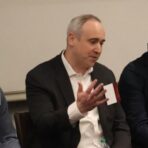
Senior Client Executive Director, Digital, Healthcare
Chris Clark is a Senior Client Executive Director for USA Healthcare & Life Sciences. In these industries, he guides and assists Intellias clients to develop and launch world-leading digital products, leveraging our advanced engineering capabilities and AI. Chris brings over 20 years of experience enabling the bleeding edge of digital innovation for healthcare and life sciences, building modern software, digital platforms, data platforms, AI/ML solutions, designs, and product strategy. Chris obtained his MBA from Vanderbilt University, and his BBA from The University of Dayton. Chris lives in the western suburbs of Chicago.

Senior Director, Medical Devices, Pharma & HCLS
Tom is a Business Development Executive at Intellias, combining strong technical aptitude with strategic business insight to help clients accelerate their organizational success. He partners with customers to identify effective business strategies and scalable technology solutions that drive measurable outcomes and long-term value.
Tom is responsible for expanding business development practices, establishing strategic partnerships, and strengthening Intellias’ trusted relationships with clients. He leads with empathy and a results-oriented mindset, ensuring successful project delivery while fostering sustainable, long-term collaborations.
With more than two decades of experience in business development and leadership, Tom has consistently contributed to company growth by mentoring teams, supporting clients, and shaping a culture built on trust, excellence, and partnership. His commitment to delivering tangible results has helped build a strong portfolio of satisfied clients and enduring business relationships.