Financial institutions are under growing pressure to meet stricter regulatory requirements while managing larger volumes of data. Regulations such as BCBS 239, MiFIR, EMIR Refit, and SFTR continue to raise expectations around data quality, governance, transparency, and auditability.
At the same time, many organizations still rely on fragmented systems, manual workflows, spreadsheets, and inconsistent data definitions. These limitations slow down compliance operations and increase operational risk.
This is where AI for regulatory compliance in finance is becoming a strategic priority, supported by AI services built for regulated industries.
Artificial intelligence is helping financial institutions automate reporting, improve monitoring, strengthen risk management, and create more transparent compliance processes. From machine learning models that identify suspicious activity to generative AI assistants that interpret internal policies, AI is reshaping how compliance teams operate.
However, successful adoption requires more than deploying new technology. Organizations need strong governance frameworks, reliable data foundations, and clear oversight of AI-driven processes.
This guide explains how institutions can implement AI and regulatory compliance in finance responsibly, efficiently, and at scale.
Why AI matters now in regulatory compliance
Regulators expect institutions to provide accurate, timely, and traceable reporting across risk, customer activity, capital management, and transaction monitoring.
At the same time, the volume of data processed by financial organizations continues to grow rapidly. Compliance teams must manage structured and unstructured information across multiple jurisdictions, business units, and legacy systems. Yet many institutions continue to struggle with fragmented data. According to Forrester, poor data quality cost one quarter of companies approximately USD 5 million annually (going up to 25 million for 7% of organizations), highlighting the financial impact of inaccurate or incomplete regulatory data.
These challenges create several operational problems:
- Siloed data environments
- Inconsistent reporting definitions
- Slow manual reconciliation processes
- Limited real-time visibility
- High operational costs
- Increased regulatory scrutiny
Traditional compliance approaches are no longer enough to handle these demands efficiently.
This is why AI in finance regulatory compliance is gaining momentum. AI-powered systems can analyse large volumes of data, identify anomalies, automate workflows, and support decision-making faster than traditional manual processes.
Generative AI, agent-based systems, and large language models (LLMs) are also expanding the role of AI across the entire compliance value chain. These technologies can support metadata generation, policy interpretation, data validation, and regulatory reporting automation.
As a result, AI is becoming more than an efficiency tool. It is increasingly viewed as a core enabler of operational resilience and regulatory readiness.
Understanding AI in regulatory compliance
AI applications in regulatory compliance
Modern compliance programs use AI in regulatory compliance across several critical functions.

Automation of reporting workflows
Many financial institutions still rely heavily on manual reporting activities. AI-driven platforms can automate data extraction, transformation, validation, and reconciliation processes.
A centralized compliance management system supported by AI helps organizations improve consistency and reduce reporting delays. AI can also strengthen lineage-driven transformations, allowing institutions to track how data moves from raw sources to final regulatory reports.
Continuous monitoring and anomaly detection
Continuous monitoring is one of the most valuable applications of AI in finance regulation.
AI systems can monitor transactions, identify abnormal patterns, detect missing fields, and flag data inconsistencies in real time. Advanced platforms use deep learning models and ensemble models to improve model accuracy in detecting unusual behaviour.
Real-time AI surveillance enables faster response to compliance risks while reducing reliance on manual reviews.
Policy-aware decisioning
Large language models and retrieval-augmented generation systems allow compliance teams to “talk to policies” using natural language. These systems help employees quickly access regulatory requirements, internal procedures, and audit documentation.
By using AI and compliance tools responsibly, institutions can improve consistency in decision-making and reduce interpretation errors.
Data quality and metadata augmentation
Data quality remains one of the largest compliance challenges in financial services. AI can automatically generate validation rules, identify duplicate records, enrich customer data, and support data cleansing.
These capabilities are especially valuable for know your customer (KYC) and anti-money laundering (AML) processes where incomplete or inaccurate information can create regulatory exposure.
Risk aggregation and scenario analysis
AI-driven analytics improve risk aggregation by processing large datasets faster and more accurately.
Machine learning models can support scenario analysis, stress testing, and predictive risk monitoring.
This helps organizations align with BCBS 239 principles while improving the speed and reliability of regulatory reporting.
Benefits and challenges of AI integration
The growing adoption of AI for regulatory compliance brings significant operational and strategic benefits.
Key benefits
Improved accuracy and consistency
AI reduces manual processing errors and improves the completeness and consistency of compliance data.
Organizations using AI-based compliance automation often achieve higher-quality reporting and better audit readiness.
Faster regulatory reporting
AI-powered workflows accelerate the production of risk and compliance reports.
Automated reporting pipelines reduce delays and support real-time tracking of compliance activities.
Reduced manual work
Many organizations report major reductions in manual lineage documentation, reconciliation, and remediation activities.
AI can also automate repetitive compliance checks, freeing teams to focus on higher-value tasks.
Enhanced fraud detection and risk assessment
AI systems strengthen fraud detection and risk assessment by analyzing transactional behavior continuously.
Real-time transaction monitoring improves the ability to identify suspicious activities early.
Improved customer lifecycle processes
AI solutions for finance help institutions accelerate onboarding and customer verification.
Automated KYC workflows can significantly reduce onboarding times while improving accuracy.
Key challenges
Despite the benefits, organizations must address several risks when deploying AI and regulatory compliance technologies.
Explainability and accountability
Many AI systems operate as complex statistical models that can be difficult to explain.
Without proper oversight, “black box” decision-making creates compliance and reputational risks.
Transparency in AI decision-making is becoming a major regulatory expectation.
Governance and model oversight
Organizations need strong model governance processes to monitor AI outputs, validate performance, and document decision logic.
Governance frameworks should include version control, benchmarking, testing, and audit procedures. Similar demands are reshaping AI in healthcare compliance, where regulators expect the same level of validation and audit trails.
Data access and privacy constraints
Cross-border data restrictions and third-party licensing agreements can limit AI implementation.
Financial institutions must also comply with data protection laws when processing sensitive customer information.
Ethical concerns
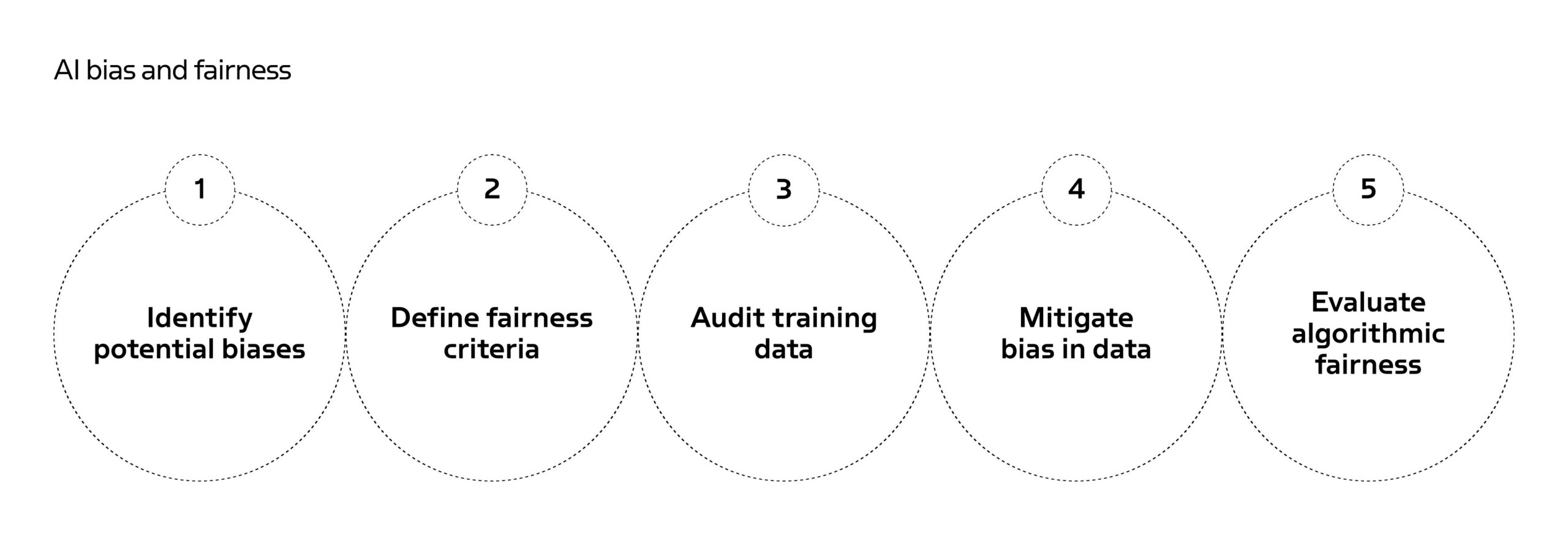
AI-driven monitoring and surveillance raise important ethical questions related to fairness, bias, and privacy.
Institutions must ensure that AI systems operate within clearly defined compliance frameworks.
Comparison of AI technologies for compliance
Different AI technologies support different compliance objectives.
| Traditional machine learning | Generative AI and LLMs | Agentic AI systems |
Traditional machine learning models work well for structured compliance tasks such as:
These models are effective for stable, rules-based processes but may struggle with rapidly evolving regulations. |
Generative AI and LLMs are expanding the scope of compliance automation.
Unlike traditional models, LLMs can process unstructured content such as:
These systems support AI for compliance by enabling natural-language search, policy interpretation, and automated documentation. |
Agentic AI systems combine multiple AI agents that coordinate tasks across workflows.
These systems can:
Because every step is logged, agentic systems also improve traceability and auditability. |
Data foundations required for AI-driven compliance
Data privacy and security in AI compliance
Data privacy and security are central to responsible AI deployment.
Financial institutions handle highly sensitive customer and transactional information. AI systems must therefore be designed with strong privacy controls from the start.
Privacy-by-design architectures help organizations align with regional regulations and reduce exposure to compliance violations.
Key requirements include:
- Role-based access controls
- Data encryption
- Sensitive data masking
- Workload isolation
- Secure cloud-based solutions
- Comprehensive audit trail capabilities
Generative AI can also support anonymization by automatically detecting personally identifiable information and applying redaction rules.
Organizations should maintain complete data lineage across all transformation layers, from raw ingestion to final reporting outputs.
This traceability is essential for demonstrating compliance during audits and investigations.
Vendor governance is equally important.
Financial institutions must assess third-party AI providers carefully to ensure alignment with regulatory, security, and licensing requirements.
Operational and organizational impact
AI adoption changes how compliance teams operate.
Traditional spreadsheet-driven workflows are increasingly replaced by automated pipelines and intelligent monitoring systems.
This shift creates new operational roles, including:
- AI quality controllers
- Lineage stewards
- Model validators
- Data governance specialists
- AI risk managers
Organizations also benefit from lower remediation costs and improved operational resilience.
Automated controls can identify errors earlier, apply corrective actions faster, and maintain more consistent compliance processes.
Some institutions using agentic AI platforms have reported high auto-remediation rates for intrinsic data errors, significantly reducing manual intervention.
However, successful transformation requires strong change management.
Compliance and risk teams must understand how AI systems operate, how decisions are made, and how outputs should be validated.
Training programs and governance policies are critical to long-term adoption.
Real-world adoption and execution
Industry use cases and real-world applications
The adoption of AI for regulatory compliance in finance is accelerating across several areas.
KYC and AML optimization
AI improves customer due diligence by automating identity verification, screening, and data enrichment.
AI systems can also identify suspicious behavior patterns more efficiently than traditional rules-based systems.
Regulatory reporting
AI supports automated reporting for regulations such as MiFIR, EMIR Refit, and SFTR. By reducing manual reconciliation and improving data lineage, institutions can deliver more accurate submissions.
Customer data enrichment
AI tools improve customer master data quality through deduplication, enrichment, and gap filling. These capabilities reduce operational friction across onboarding and compliance workflows.
Fraud and anomaly detection
Advanced AI systems use transactional data benchmarking and anomaly detection models to identify unusual activity. Real-time tracking improves incident response and strengthens financial crime prevention.
Policy compliance automation
RAG-based assistants help compliance teams navigate large volumes of internal and external regulations.
This enables faster decision-making and more consistent policy interpretation.
Risk data aggregation
AI-driven aggregation supports enterprise-wide visibility into risk exposure and reporting obligations.
This is especially valuable for global institutions operating across multiple regulatory jurisdictions.
Regulatory and ethical considerations
As AI adoption grows, regulators are increasing their focus on governance, explainability, and accountability.
Financial institutions must demonstrate that AI systems operate transparently and produce reliable outcomes.
This includes maintaining:
- Documented transformation logic
- Version-controlled models
- Lineage documentation
- Validation records
- Benchmarking procedures
- Audit-ready evidence
Strong governance frameworks are essential for managing these requirements.
Organizations should also establish ethical review processes to monitor unintended consequences and reduce bias risks.
Managing hallucination risks in LLM-based systems is another growing priority.
Institutions should use deterministic validation layers, human oversight, and controlled retrieval systems to reduce inaccurate outputs.
Because regulatory expectations differ across jurisdictions, global financial institutions must continuously monitor evolving AI guidance.
8 steps to implement AI for regulatory compliance
A structured implementation approach helps organizations reduce risk while scaling AI adoption effectively.
Step 1 — Conduct a regulatory data readiness assessment
Start by evaluating your current data architecture, governance maturity, lineage visibility, and reporting capabilities.
Identify gaps related to BCBS 239 alignment, data quality, and auditability.
Step 2 — Identify high-value AI use cases
Prioritize areas where AI can deliver measurable compliance value.
Common starting points include:
- KYC automation
- AML monitoring
- Regulatory reporting
- Data quality remediation
- Fraud detection
- Policy search assistants
Step 3 — Build a secure, scalable data platform
Successful AI deployment depends on reliable data infrastructure.
Organizations should create centralized platforms with unified data models, lineage tracking, and secure transformation layers.
Step 4 — Deploy agentic AI for data quality and lineage
Introduce AI-driven automation for:
- Validation rule generation
- Metadata enrichment
- Anomaly detection
- Lineage inference
- Auto-remediation workflows
This reduces manual effort while improving consistency.
Step 5 — Introduce policy-aware AI assistants
Deploy controlled AI assistants using retrieval-augmented generation and trusted data sources.
These systems should provide traceable answers, explainable outputs, and audit-ready documentation.
Step 6 — Implement automated reporting pipelines
AI-powered reporting pipelines improve speed, consistency, and reconciliation accuracy.
Organizations can also automate narrative generation for regulatory reporting submissions.
Step 7 — Establish governance, controls, and model oversight
Create clear governance structures covering:
- Model validation
- Access management
- Benchmarking
- Risk controls
- Monitoring procedures
- Documentation standards
Human oversight remains critical for high-risk compliance decisions.
Step 8 — Scale across regions and business domains
Once initial use cases prove successful, organizations can expand AI adoption across additional reporting regimes and operational functions.
Scalable governance and standardized controls are essential for long-term success.
Looking ahead
Future trends and strategic outlook
AI adoption in financial compliance will continue to accelerate over the next several years.
Several trends are shaping the future of AI-driven compliance.
Rise of agentic architectures
Organizations are moving toward more autonomous systems capable of managing entire compliance workflows.
These architectures improve scalability, responsiveness, and operational resilience.
Increased focus on data quality automation
Regulators are placing greater emphasis on automated data validation and completeness.
AI-driven data quality controls are becoming essential for audit readiness.
Integration of AI and cybersecurity
Compliance systems are increasingly connected with cybersecurity and identity analytics platforms.
This convergence strengthens fraud prevention and operational resilience.
Audit-ready-by-design platforms
Future compliance platforms will prioritize built-in traceability, explainability, and governance from the beginning.
This approach reduces remediation costs and improves regulatory confidence.
Responsible AI regulation
Global regulators are developing more detailed guidance on responsible AI use in financial services, including the EU AI Act risk categories, which now shape how institutions classify and govern AI systems.
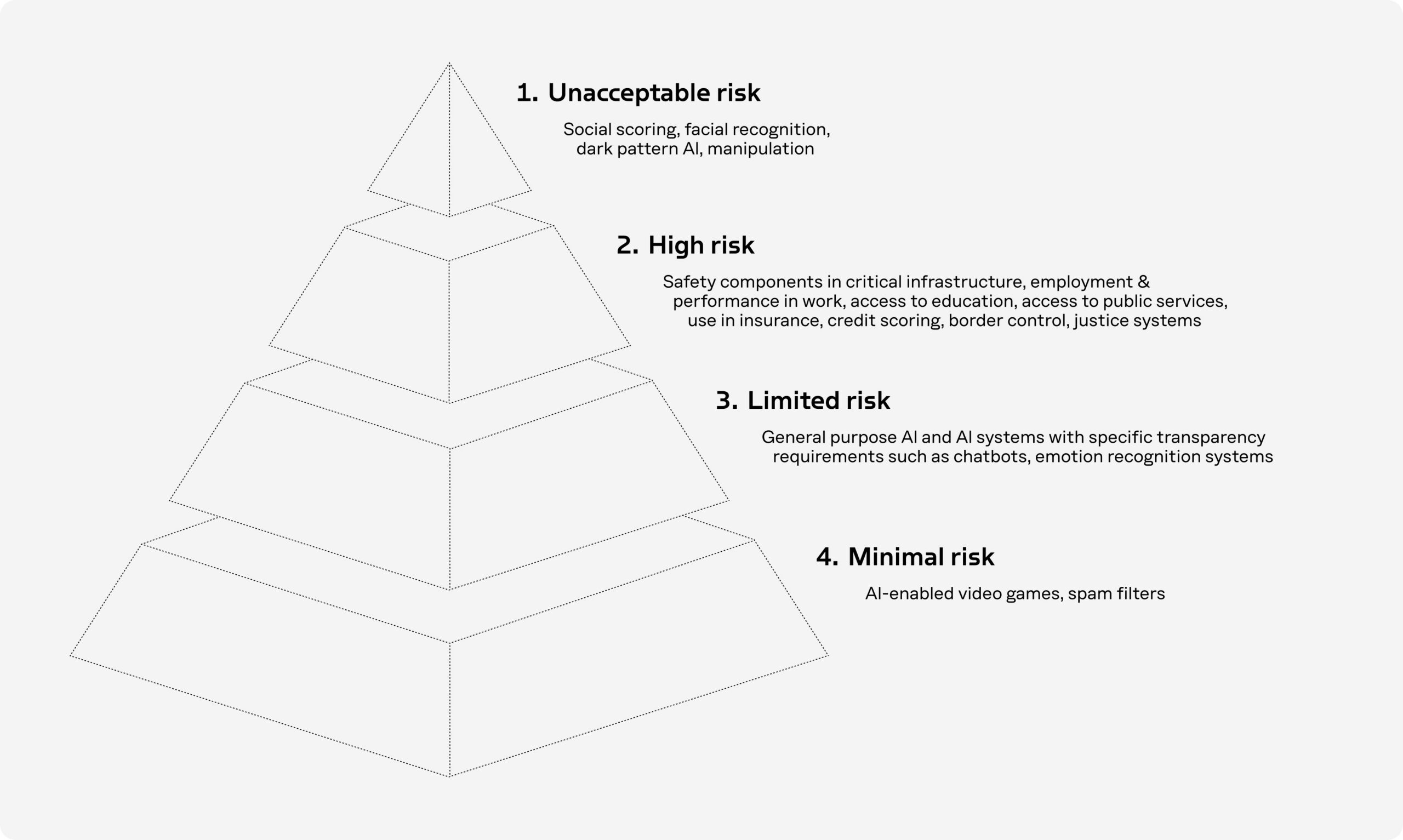
Organizations that establish strong governance early will be better positioned to adapt.
Conclusion
AI is rapidly becoming a core component of modern compliance operations. Financial institutions face growing pressure to improve reporting accuracy, strengthen governance, and manage increasingly complex regulatory obligations. AI enables organizations to automate workflows, improve monitoring, strengthen data quality, and accelerate decision-making.
However, long-term success depends on more than technology alone. Organizations must combine strong governance, transparent processes, secure data management, and responsible oversight to ensure sustainable adoption.
Institutions that modernize their compliance foundations today will gain measurable operational, regulatory, and competitive advantages in the years ahead.
Ready to bring AI into your compliance operations? Our responsible AI consulting can help you build the governance and data foundations to do it safely. Get in touch to talk through your use case.